
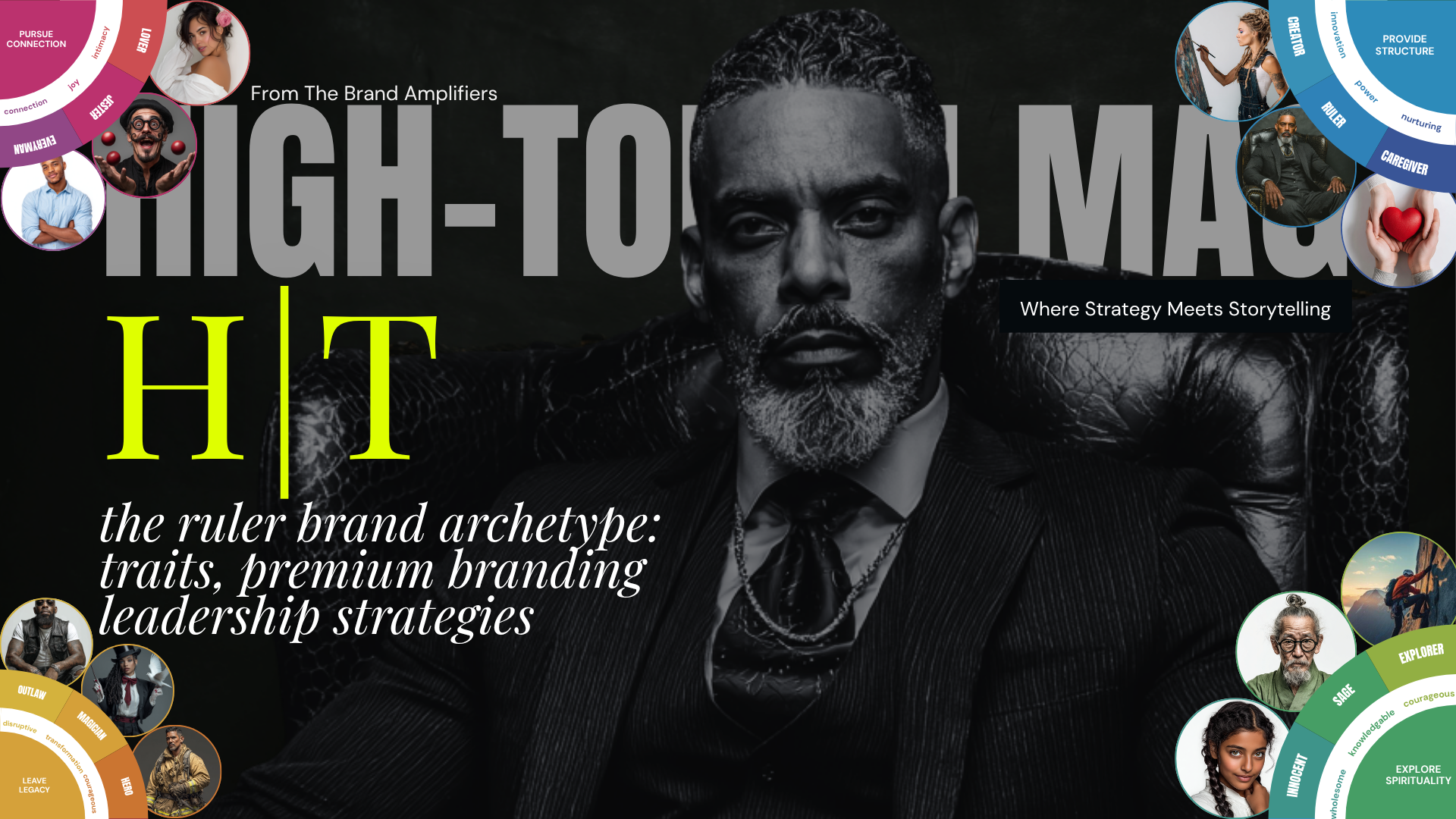
THE RULER BRAND ARCHETYPE: EXAMPLES, TRAITS, AND PREMIUM BRANDING STRATEGIES
Most brands compete for attention. The strongest brands compete for authority.
This distinction explains why some companies command premium prices, shape entire industries, and earn customer trust long before a purchase is made. While many businesses invest heavily in advertising, discounts, and promotional campaigns, category leaders understand that lasting success is rarely built on visibility alone. It is built on confidence.
Customers naturally gravitate toward brands that reduce uncertainty.
When buying a luxury watch, selecting enterprise software, choosing a financial advisor, or hiring a strategic consultancy, people are not simply purchasing a product or service. They are investing in confidence that they are making the right decision.
This is the psychological foundation of the Ruler Brand Archetype.
The Ruler does not seek attention through loud marketing or constant promotions. Instead, it establishes leadership through consistency, expertise, authority, and an unwavering commitment to excellence. These brands don't ask customers to trust them—they create experiences that earn trust over time.
Rolex rarely competes on specifications.
Mercedes-Benz rarely competes on price.
American Express rarely competes on rewards alone.
Their greatest competitive advantage is the confidence customers place in their leadership.
That confidence is what transforms brands into market leaders.
What Is the Ruler Brand Archetype?
The Ruler Brand Archetype represents leadership, authority, responsibility, and order. Rooted in Carl Jung's theory of universal archetypes, the Ruler embodies humanity's desire for stability in uncertain environments.
Throughout history, societies have naturally looked to strong leaders during periods of uncertainty. Whether kings, queens, presidents, military commanders, or respected industry pioneers, these figures represented structure, security, and direction.
Brands can fulfill a remarkably similar role.
Customers are constantly faced with overwhelming choices. Hundreds of similar products compete for attention. Conflicting opinions make decision-making increasingly difficult. Information overload creates uncertainty.
The Ruler archetype reduces that uncertainty.
Rather than asking customers to compare every feature or evaluate every alternative, Ruler brands position themselves as trusted authorities that have already established the standard.
They don't simply participate in the market.
They define it.
This distinction separates true Ruler brands from businesses that merely appear premium.
Luxury alone does not make a company a Ruler.
Neither does high pricing.
A genuinely authoritative brand earns its position through expertise, consistency, and leadership that customers recognize over years—not through marketing slogans.
The Psychology Behind the Ruler Archetype
Understanding the Ruler archetype requires looking beyond branding into psychology.
Carl Jung proposed that archetypes represent recurring patterns deeply embedded within the collective unconscious. These universal characters appear repeatedly because they satisfy fundamental human needs.
The Ruler satisfies one of the most powerful of those needs:
The desire for certainty.
Human beings instinctively seek environments that feel organized, predictable, and secure.
Behavioral psychologists have long observed that uncertainty increases cognitive stress. When faced with multiple unfamiliar options, people naturally look for signals that reduce perceived risk.
Authority is one of those signals.
Professor Robert Cialdini identified authority as one of the primary principles of influence. People are significantly more likely to trust recommendations from recognized experts, established institutions, and respected leaders because authority serves as a mental shortcut during decision-making.
This principle explains why customers often choose brands that appear more established—even when competing products offer similar features.
Leadership creates confidence.
Confidence reduces risk.
Reduced risk increases trust.
Trust drives purchasing decisions.
This psychological chain explains why the Ruler archetype remains one of the most influential brand personalities across luxury, finance, healthcare, consulting, technology, and professional services.
Customers are not buying authority.
They are buying the confidence authority creates.
The Brand Leadership Pyramid™
Many businesses believe premium brands begin with exclusivity.
In reality, exclusivity is the outcome—not the starting point.
The strongest Ruler brands build authority through what we call the Brand Leadership Pyramid™.
Consistency → Credibility → Trust → Authority → Leadership
Every premium brand begins with consistency.
Customers repeatedly encounter the same messaging, the same standards, and the same quality regardless of where they interact with the business.
Consistency creates credibility.
When brands consistently deliver what they promise, customers begin believing those promises.
Credibility creates trust.
Trust reduces uncertainty.
Over time, trust evolves into authority.
Authority eventually becomes leadership—not because the company claims to lead, but because customers naturally begin viewing it as the benchmark for others.
This progression explains why genuine Ruler brands rarely describe themselves as industry leaders.
Their customers do it for them.
Rolex doesn't need to tell the world it represents prestige.
Its reputation already communicates that message.
Likewise, Microsoft didn't become one of the world's most influential technology companies by claiming authority.
It earned authority through decades of consistent innovation, reliability, and market leadership.
Premium positioning is therefore not created by expensive branding.
It is created by repeatedly demonstrating expertise until customers instinctively associate the brand with leadership.
Core Traits of the Ruler Brand Archetype
Although every Ruler brand expresses its personality differently, several defining characteristics consistently distinguish this archetype from others.
Leadership
Ruler brands take responsibility.
Rather than reacting to market changes, they shape the direction of their industries. Customers look to them for guidance because they consistently demonstrate strategic thinking and long-term vision.
Authority
Authority should never be confused with arrogance.
True authority comes from knowledge, experience, and the ability to simplify complex decisions for customers. The strongest Ruler brands educate first and lead second.
Excellence
The Ruler rarely competes on being the cheapest option.
Instead, it competes on being the benchmark against which others are measured.
Every customer interaction reinforces exceptional standards.
Discipline
Consistency defines the Ruler personality.
Visual identity, messaging, customer service, product quality, and leadership communication all reinforce the same professional image.
Nothing feels accidental.
Everything feels intentional.
Stability
While trends constantly change, Ruler brands project permanence.
Customers believe these businesses will continue delivering excellence years into the future.
That perception strengthens confidence.
Responsibility
The Ruler understands that leadership carries accountability.
Rather than chasing attention, these brands focus on protecting reputation, maintaining quality, and continuously improving the customer experience.
What Makes a Ruler Brand Different from Other Premium Brands?
One of the biggest misconceptions in branding is assuming every luxury brand belongs to the Ruler archetype.
It doesn't.
Luxury describes market positioning.
The Ruler describes psychological identity.
A luxury fashion brand built around passion, beauty, and intimacy may align more closely with the Lover archetype.
An innovative luxury technology company could embody the Creator.
A high-end adventure brand might belong to the Explorer.
The Ruler becomes the right choice when leadership itself is the value proposition.
Customers choose these brands because they believe they represent the highest standard within their category.
Rolex represents authority in precision.
Rolls-Royce represents authority in craftsmanship.
American Express represents authority in financial trust.
IBM represents authority in enterprise technology.
These companies are admired not simply because they are expensive.
They are admired because they consistently demonstrate competence, confidence, and credibility.
That distinction is what makes the Ruler Brand Archetype one of the most powerful strategic positioning frameworks available.
Why the Ruler Brand Archetype Matters More in the AI Era
Authority has always influenced purchasing decisions.
Today, it also influences discoverability.
AI-powered search experiences such as Google AI Overviews, ChatGPT, Gemini, and Perplexity increasingly synthesize information from brands that consistently demonstrate expertise and credibility across multiple trusted sources.
While AI systems do not identify businesses by archetype, they do evaluate the signals that strong Ruler brands naturally produce:
Consistent positioning
Recognized expertise
Thought leadership
Original insights
Strong digital reputation
Authoritative content
Trusted brand mentions
In other words, the same qualities that help customers trust a Ruler brand also strengthen the signals AI systems use to understand brand authority.
As search continues evolving beyond keywords toward reputation and expertise, businesses that communicate clear leadership across every digital touchpoint will hold a significant competitive advantage.
The Ruler Brand Archetype is no longer simply a branding choice.
It is becoming a strategic framework for building authority that resonates with both people and intelligent search systems.
Building a Premium Ruler Brand That Customers Trust
A successful Ruler Brand Archetype is never built through expensive branding alone.
Many businesses believe premium positioning comes from elegant logos, black-and-gold color palettes, luxury photography, or premium pricing. While these visual elements can reinforce perception, they cannot create authority on their own.
Customers don't trust a brand because it looks expensive.
They trust a brand because every interaction consistently demonstrates competence, leadership, and confidence.
This is what separates authentic Ruler brands from businesses that simply imitate luxury aesthetics.
Rolex isn't respected because it uses gold in its advertising.
Microsoft isn't an industry leader because of its logo.
American Express doesn't command loyalty because of premium card designs.
Each has earned authority through years of delivering experiences that consistently reinforce leadership.
The Ruler archetype is therefore less about appearance and more about operational excellence communicated through every customer touchpoint.
The Premium Positioning Framework™
Many brands attempt to build prestige from the outside in.
True Ruler brands build it from the inside out.
At The Brand Amplifiers, we describe this progression as the Premium Positioning Framework™.
Expertise → Trust → Authority → Exclusivity → Premium Pricing
Notice what comes first.
Not luxury.
Not exclusivity.
Not expensive branding.
Expertise.
Businesses first demonstrate exceptional knowledge and consistently solve meaningful problems.
Over time, expertise creates trust.
Repeated trust establishes authority.
Authority naturally creates exclusivity because customers begin associating the brand with category leadership.
Only then does premium pricing become sustainable.
Many companies reverse this process.
They increase prices, redesign their website, use luxury imagery, and expect customers to perceive them as premium.
Without authority, premium pricing feels unjustified.
Without trust, exclusivity appears artificial.
The world's strongest Ruler brands understand that premium perception is earned—not designed.
The Brand Voice of a Ruler
Every archetype communicates differently.
The Hero inspires.
The Explorer encourages discovery.
The Caregiver reassures.
The Jester entertains.
The Ruler Brand Archetype leads.
Its communication reflects confidence without arrogance.
Authority without intimidation.
Precision without complexity.
A Ruler brand rarely relies on exaggerated claims such as:
"We're the best."
"Nobody does it better."
"The world's leading solution."
These statements attempt to convince.
True authority rarely needs convincing.
Instead, Ruler brands communicate through evidence, expertise, and calm confidence.
Their messaging is measured.
Professional.
Decisive.
Strategic.
Every sentence reinforces competence.
Rather than demanding attention, they naturally command respect.
This communication style also influences executive thought leadership.
The strongest Ruler brands publish original research, industry insights, strategic frameworks, and educational content rather than promotional messaging.
They teach.
They lead.
They shape conversations.
Over time, customers begin viewing them as the authority within their industry.
Visual Identity: Designing for Authority
Visual identity is often the first signal customers receive about a brand.
For the Ruler archetype, every visual decision should communicate confidence, sophistication, and control.
This doesn't necessarily mean expensive design.
It means intentional design.
Strong Ruler brands typically embrace:
Clean typography
Structured layouts
Balanced composition
Minimal visual clutter
High-quality photography
Consistent spacing
Premium materials
Sophisticated color palettes
Deep navy, charcoal, black, white, and muted gold are commonly associated with authority because they communicate professionalism rather than excitement.
Photography should reinforce leadership.
Executive environments.
Architectural precision.
Craftsmanship.
Innovation.
Confidence.
Rather than filling every page with decorative graphics, Ruler brands create space.
Space communicates confidence.
Businesses trying too hard to appear premium often overwhelm customers with excessive visual effects.
True authority is comfortable with restraint.
Creating Exceptional Customer Experiences
One of the greatest misconceptions about the Ruler Brand Archetype is that customer experience matters less than prestige.
The opposite is true.
Premium expectations create higher standards.
Customers expect Ruler brands to deliver flawless experiences because authority creates responsibility.
Every interaction either strengthens or weakens leadership.
This includes:
Website navigation.
Response times.
Sales consultations.
Proposal quality.
Customer onboarding.
Support interactions.
Billing.
Follow-up communication.
Problem resolution.
A luxury website followed by slow customer support immediately damages authority.
Likewise, premium messaging paired with inconsistent service creates distrust.
The strongest Ruler brands eliminate uncertainty throughout the customer journey.
Customers know exactly what to expect.
Every process feels intentional.
Every interaction reinforces confidence.
This predictability becomes one of the most powerful competitive advantages available to premium businesses.
Marketing Strategies for the Ruler Brand Archetype
Traditional marketing often focuses on visibility.
The Ruler focuses on credibility.
Rather than producing large volumes of promotional content, Ruler brands invest in becoming recognized authorities.
Their marketing strategy prioritizes long-term trust over short-term attention.
This often includes:
Thought Leadership
Publishing original research.
Sharing strategic insights.
Providing expert analysis.
Developing proprietary frameworks.
The goal isn't simply to create content.
It's to shape industry conversations.
Educational Content
Authoritative blogs.
White papers.
Executive guides.
Case studies.
Industry reports.
Educational resources reinforce expertise while helping customers make informed decisions.
Digital Public Relations
Authority grows when others reference your expertise.
Media interviews.
Podcast appearances.
Conference presentations.
Industry publications.
Guest articles.
These external signals strengthen both customer trust and digital authority.
Executive Branding
For many Ruler brands, leadership visibility matters.
Founders and executives often become trusted voices within their industries.
Customers increasingly evaluate expertise through people as much as organizations.
Building executive authority therefore strengthens brand authority.
Ruler Brand Examples: What Makes Them Successful?
Many articles simply list famous companies without explaining why they represent the Ruler Brand Archetype.
The difference lies in their strategic positioning.
Rolex
Rolex doesn't compete through product specifications.
It represents leadership in precision, craftsmanship, and achievement.
Owning a Rolex signals confidence, success, and lasting accomplishment.
The watch is simply the physical expression of that perception.
Mercedes-Benz
Mercedes-Benz has built authority through engineering excellence.
Its communication emphasizes innovation, safety, and performance rather than aggressive sales messaging.
Every customer experience reinforces confidence in German engineering.
American Express
American Express positions itself as more than a payment provider.
Its value comes from trust.
Security.
Exclusive experiences.
Exceptional customer service.
The company reinforces leadership by helping customers feel protected rather than simply processing transactions.
Microsoft
Unlike traditional luxury brands, Microsoft demonstrates that the Ruler archetype isn't limited to premium pricing.
Its authority comes from shaping how businesses operate globally.
Its products create order within increasingly complex digital environments.
Leadership—not exclusivity—is its defining characteristic.
Rolls-Royce
Rolls-Royce embodies craftsmanship at its highest level.
Every vehicle represents extraordinary attention to detail.
The company rarely competes on features.
Instead, it reinforces mastery through heritage, precision, and uncompromising quality.
Common Mistakes Ruler Brands Make
Despite its strengths, the Ruler archetype carries unique risks.
The most common mistake is confusing authority with superiority.
Customers respect confident brands.
They avoid arrogant ones.
Leadership should inspire confidence—not intimidation.
Another frequent mistake is becoming emotionally distant.
Professionalism should never eliminate humanity.
Even premium brands benefit from empathy, transparency, and authentic communication.
Some organizations also overemphasize exclusivity.
Exclusivity without clear value creates unnecessary barriers.
True Ruler brands welcome the right customers rather than simply excluding everyone else.
Finally, many businesses invest heavily in visual identity while neglecting operational excellence.
Luxury branding cannot compensate for inconsistent customer experiences.
Authority is demonstrated through delivery—not appearance.
Why the Ruler Brand Archetype Matters in AI Search
For decades, authority influenced human purchasing decisions.
Today, it also influences how AI systems understand and recommend brands.
Search is no longer limited to ten blue links. Customers increasingly ask Google AI Overviews, ChatGPT, Gemini, Claude, and Perplexity for recommendations before visiting a company's website. These systems synthesize information from multiple trusted sources to determine which brands demonstrate expertise, credibility, and consistency.
While AI models do not classify businesses as "Ruler" brands, they reward the qualities that define the Ruler archetype:
Consistent positioning
Recognized expertise
Thought leadership
Original research
Strong brand reputation
Authoritative digital signals
This means the same strategic discipline that builds customer trust also strengthens AI visibility.
Brands that communicate one clear identity across their website, LinkedIn, media mentions, customer reviews, podcasts, videos, and knowledge panels are easier for AI systems to understand than brands presenting conflicting messages across different platforms.
Authority has become both a branding advantage and a search advantage.
The Authority Signal Framework™
At The Brand Amplifiers, we describe this relationship through the Authority Signal Framework.
Expert Knowledge → Consistent Messaging → Industry Recognition → Customer Trust → AI Confidence → Brand Authority
Every stage strengthens the next.
Publishing insightful content builds expertise.
Consistent messaging strengthens recognition.
Recognition generates customer trust.
Trust attracts mentions, backlinks, interviews, and reviews.
These signals increase the confidence AI systems have when associating your brand with a particular area of expertise.
The result is a stronger digital reputation that benefits both search visibility and customer perception.
Unlike short-term SEO tactics, authority compounds over time.
How to Build a Ruler Brand Step by Step
Adopting the Ruler archetype is not about changing your logo or choosing premium colors. It requires aligning every aspect of your business around leadership and consistency.
1. Define Your Leadership Position
Ask yourself:
What standard does our business want to set?
What problem do we solve better than anyone else?
Why should customers trust us instead of competitors?
Leadership begins with clarity, not confidence alone.
2. Build Expertise Before Promotion
Ruler brands educate before they sell.
Publish original insights, research, strategic frameworks, and case studies that demonstrate expertise.
When customers repeatedly learn from your content, they begin viewing your brand as an authority rather than simply another vendor.
3. Standardize Every Customer Touchpoint
Every interaction should reinforce the same leadership position.
Review your:
Website
Sales presentations
Proposals
Email communication
Customer support
Social media
Onboarding process
CRM automation
If each channel feels like a different company, your authority weakens.
4. Invest in Executive Thought Leadership
Customers increasingly trust people before companies.
Founders, CEOs, consultants, and subject matter experts should become visible voices within their industry through articles, interviews, podcasts, conference presentations, and LinkedIn content.
Strong personal authority strengthens corporate authority.
5. Measure Perception, Not Just Performance
Many businesses measure clicks, impressions, and conversions.
Ruler brands also measure trust.
Monitor:
Brand mentions
Customer sentiment
Share of voice
Referral rates
Repeat business
Review quality
Thought leadership opportunities
Authority grows through perception as much as performance.
Is the Ruler Brand Archetype Right for Every Business?
The Ruler archetype is powerful, but it is not universal.
Businesses operating in professional services, finance, healthcare, legal services, consulting, enterprise software, education, architecture, premium manufacturing, and luxury industries often benefit from the authority and confidence it communicates.
However, brands built around playfulness, creativity, adventure, or emotional intimacy may find stronger alignment with other archetypes such as the Jester, Creator, Explorer, or Lover.
The objective is not to choose the most prestigious archetype.
The objective is to choose the one that authentically reflects the value your business delivers.
Customers can quickly recognize when authority feels genuine—and when it is merely being performed.
Final Thoughts
The Ruler Brand Archetype is often misunderstood as a symbol of power, prestige, or exclusivity.
In reality, it represents something far more valuable:
Responsibility.
Leadership.
Consistency.
Trust.
The strongest Ruler brands do not dominate markets because they appear powerful.
They dominate because customers believe they will consistently deliver the highest standard of quality, expertise, and reliability.
Whether you're building a premium consultancy, a luxury brand, a technology company, or an enterprise service business, the principles of the Ruler archetype remain the same.
Lead with expertise.
Communicate with confidence.
Deliver with consistency.
Earn trust over time.
When authority is built on genuine value rather than perception alone, customers stop comparing you to competitors.
Instead, they begin measuring competitors against you.
That is the defining characteristic of every truly successful Ruler Brand Archetype
